.png)
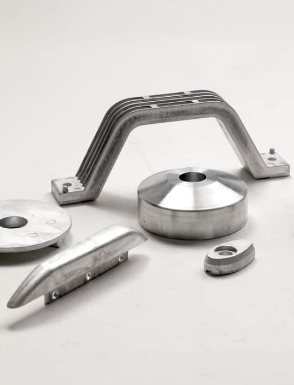
Zinc sacrificial anodes. New Bi-TEC® Alloy
What are the new Bi-TEC® anodes?
In recent years, aluminum anodic alloys, being environmentally friendly, have gained significant market share and, under the right conditions, can be used to replace zinc anodes.
However, a commitment to continuous improvement, a desire to meet market needs and respect for the environment have led Tecnoseal to develop a new, fully sustainable zinc-based anodic alloy that is cadmium-free.
Currently, the global market offers zinc-based anodic alloys that use cadmium as an activator.
As is well known, cadmium is a carcinogenic heavy metal, banned by major environmental regulations both within the EU and outside Europe.
In the United States, for example, Prop. 65 lists cadmium among the substances that are extremely harmful to the environment and human health, and therefore prohibits its use.
Tecnoseal has carried out research into a new heavy-metal-free zinc-based anodic alloy to develop a product capable of completely replacing the current zinc anode.
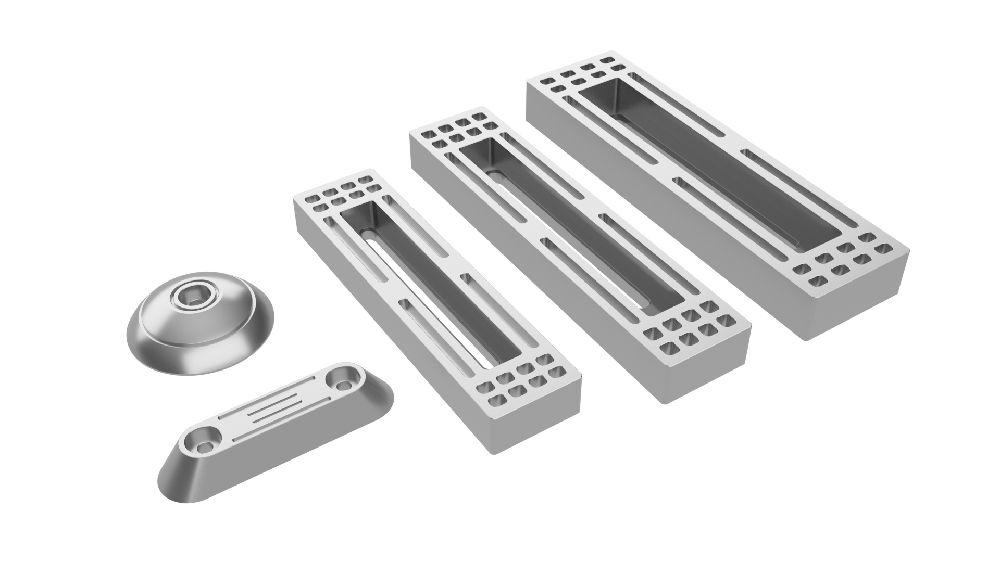
The tests carried out have led to the development of a new zinc-based anode product containing bismuth instead of cadmium as an activator.
The new alloy was entirely researched and developed by Tecnoseal at its production plant in Grosseto, Italy, where, in addition to purely electrochemical validation, significant assessments were carried out to characterise its workability in the workshop.
Compliance with the DNV RP B401 standard was validated at the laboratories of the ‘Giulio Natta’ Department of Chemistry, Materials and Chemical Engineering at the Politecnico di Milano.
All anodes in the catalogue can be manufactured in accordance with the new alloy specification.
Bi-TEC® anodic alloy:
| Element | Amount (%) |
|---|---|
| Aluminum (Al) | 0.10 – 0.50 |
| Bismuth (Bi) | 0.025 – 0.065 |
| Cadmium (Cd) | NA |
| Copper (Cu) | ≤ 0.005 |
| lndium (In) | NA |
| lron (Fe) | ≤ 0.005 |
| Magnesium (Mg) | NA |
| Nickel (Ni) | NA |
| Silicon (Si) | NA |
| Zinc (Zn) | Remaining |
| Other elements | ≤ 0.10 |
Electrochemical properties
| Nominal electrochemical capacitance | 780 AmpHr/Kg |
|---|---|
| Nominal open circuit potential | -1050 mV Ag/AgCl reference cell |
| Specific weight | 7140 Kg/m3 |